Back to Projects

Project

Cobot Prototyping Platform

Low-cost cobot test platform built around a modular kinematic puppet, with interchangeable end-effectors, connectors, bases, CAD iteration, and physical prototypes.

Modular robot-skeleton concept for low-cost cobot prototyping, using morphology tables, weighted decision matrices, CAD, and physical prototypes to compare end-effector, connector, and base options.
  • Cobotics
  • HRI
  • Robot Hardware
  • CAD
  • Prototyping
  • Human-Centred
  • Modular Design
Cobot Prototyping Platform visual 1
Project imageKinematic puppet platform concept
01

Overview

This project framed the Kinematic Puppet as a low-cost physical cobot test platform. The idea was to use a modular robot skeleton so forms, joints, bases, and end-effectors could be handled and rearranged early.

The page focuses on concept generation, connector and base design, morphology comparison, CAD iteration, and physical prototyping as a way to discuss early cobotics design.

02

Problem

Early cobot concepts are hard to assess when the robot form exists only as sketches or CAD renders.

The design challenge was to propose a low-cost platform with modular parts, safe handling, manufacturable interfaces, and enough flexibility to compare end-effector and morphology options before any industrial-grade build.

03

My Role

  • Developed CAD and physical prototype concepts for a modular cobot test platform
  • Explored end-effector, connector, base, and robot-skeleton morphology options
  • Used morphology tables and weighted decision matrices to compare design directions
  • Prepared visuals and design notes for early cobotics and human-robot interaction review
04

Process

  1. Problem framing

    The project treated the kinematic puppet as a physical tool for exploring cobot shape, reach, modularity, and end-effector options at low cost.

  2. Morphology exploration

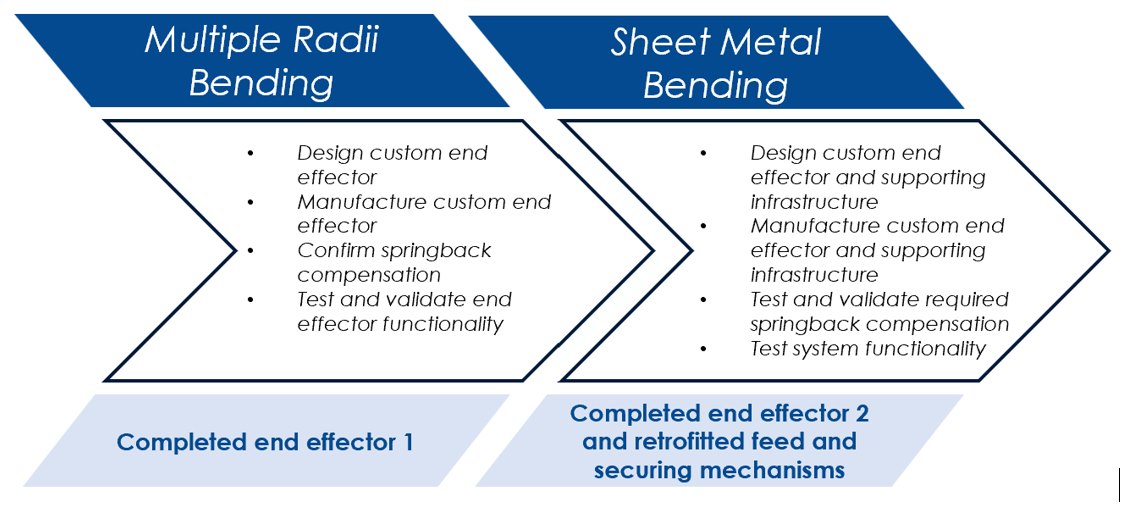
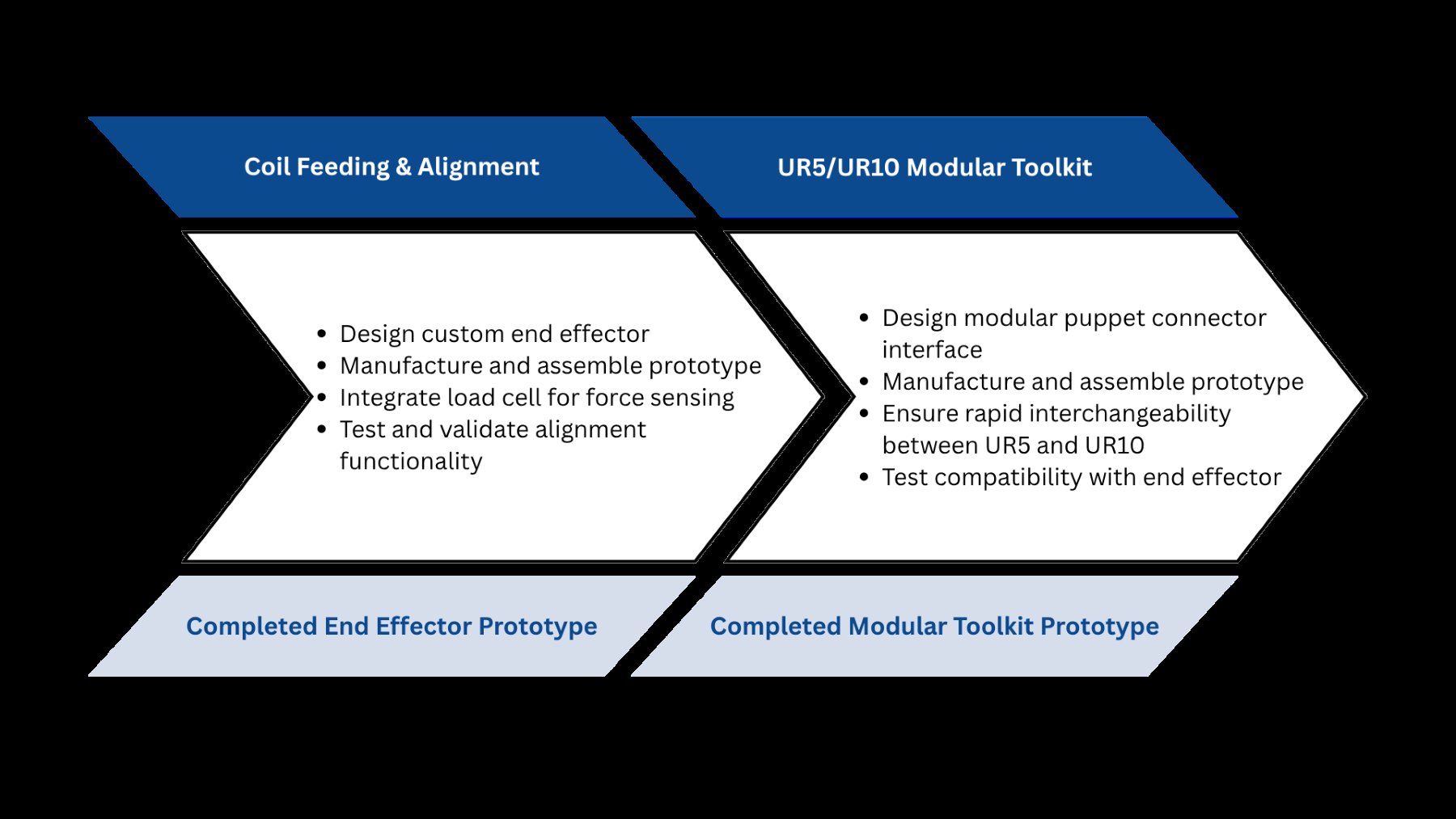
    End-effectors, connectors, bases, and body layouts were explored as interchangeable building blocks rather than one fixed robot arrangement.

  3. Concept selection

    Morphology tables and weighted decision matrices helped compare modularity, manufacturability, safe handling, ease of assembly, and prototype constraints.

  4. CAD and prototyping

    CAD and physical prototype visuals translated selected ideas into tangible robot-hardware pieces for review and later testing.

05

Key Decisions

Modular robot skeleton

The kinematic puppet approach keeps robot-body changes discussable before committing to a fixed cobot form.

Interchangeable interfaces

Gripper, hook, claw, clamp, magnet, connector, and base concepts were compared as modular options for different handling and interaction scenarios.

Prototype constraints

The work kept safe handling, manufacturability, modularity, serviceable interfaces, and testability visible as prototype-stage constraints.

06

Project Material

Selected project material used to show CAD, component, prototype, or documentation details.

Cobot Prototyping Platform visual 1
Fig. 01Kinematic puppet platform concept
Cobot Prototyping Platform visual 2
Fig. 02Problem framing and interaction scenario
07

Outcome

A prototype-stage case study showing modular cobot prototyping, end-effector options, connector and base concepts, and CAD-to-prototype communication.

Relevant to robot hardware because it connects early interaction questions to mechanical choices: modular interfaces, safe handling, manufacturable parts, and testable concepts.

08

Next Steps

  • Physical robot forms make early cobotics concepts easier to discuss than abstract CAD alone.
  • Structured concept selection keeps modularity, manufacturability, safe handling, and testability visible during early robot-hardware design.
  • Add short annotations showing how each end-effector, connector, and base option changes the robot morphology or interaction scenario.
  • Prepare any raw CAD or print files for public release only after ownership, privacy, and documentation checks.